
Monthly Soul Spark
Cacao for midlife women
Mindful Cacao Ritual: A Heart-Centered Ally for Midlife Women
Inspired by my recent journey to an organic cacao finca in Panama
My Journey to an Organic Cacao Finca
I traveled from the mountains and cloudforest to the Caribbean side of Panama, exploring tropical beaches, vibrant culture, and lush landscapes. Along the way, we visited an organic cacao finca, a small family-run plantation nestled between the jungle and the warm, moist sea breeze.
Walking among the cacao trees, the owner showed us a pod covered in pale, ghostly patches.
“This fungus kills up to 80% of our crop every year,” he explained.
I saw pods shriveled prematurely, while some looked fine on the outside but were powder inside. Then came the part that stayed with me:
“We’re organic. We don’t use chemicals to fight it. Chemicals kill the soil. And without healthy soil, nothing has life. We tried everything natural, but nothing works. So we had to learn to live with it.”
It reminded me how midlife asks women to make similar choices: letting go of what doesn’t serve to protect what truly matters.
When he opened a fresh cacao pod and placed the white, sticky fruit in my hand, I felt the raw aliveness of cacao - sweet, tangy, and soft - a plant that has nourished humanity for thousands of years. That day transformed cacao, for me, from “healthy chocolate” into a true ally for women in midlife.

The Healing Power of Real Cacao for Midlife Women
Cacao is not cocoa. Real, minimally processed cacao is nutrient-rich and carries compounds that our bodies recognize and benefit from. Here’s why it’s especially supportive for midlife women:
1. Calms the Nervous System
Cacao is rich in magnesium, tryptophan, theobromine, and anandamide, helping ease:
anxiety
tension
irritability
mood swings
restless sleep
It provides warmth without overstimulation - perfect for women who become caffeine-sensitive during perimenopause.
2. Supports Hormonal Balance
Cacao’s minerals and antioxidants help the body manage:
fatigue
inflammation
blood flow changes
brain fog
emotional fluctuations
Many women report feeling grounded yet open after drinking cacao.
3. Awakens Energy and Vitality
Theobromine gives a gentle, uplifting boost without the crash of coffee.
Cacao becomes a daily companion for women navigating midlife energy dips.
4. Reconnects Women with Pleasure
Cacao increases “feel-good” neurotransmitters like dopamine and PEA (the love molecule), helping women rediscover:
sensuality
joy
creativity
inspiration
Midlife is a gateway, not a loss - cacao supports the rising of that inner fire.

Beyond the Beans: Cacao Butter for Mature Skin
Cacao butter is a secret gift for mature skin, offering:
deeply moisturizing fatty acids
antioxidants
anti-inflammatory compounds
natural protection from dryness
nutrients supporting elasticity
For menopausal skin, cacao butter can:
soften fine lines
soothe irritation
strengthen the skin barrier
improve firmness
restore radiance
Traditionally, women in Panama apply cacao butter to:
face, belly, breasts
dry patches, scars, stretch marks
It’s a simple self-care ritual, reminding us that nature provides remedies for every life phase.
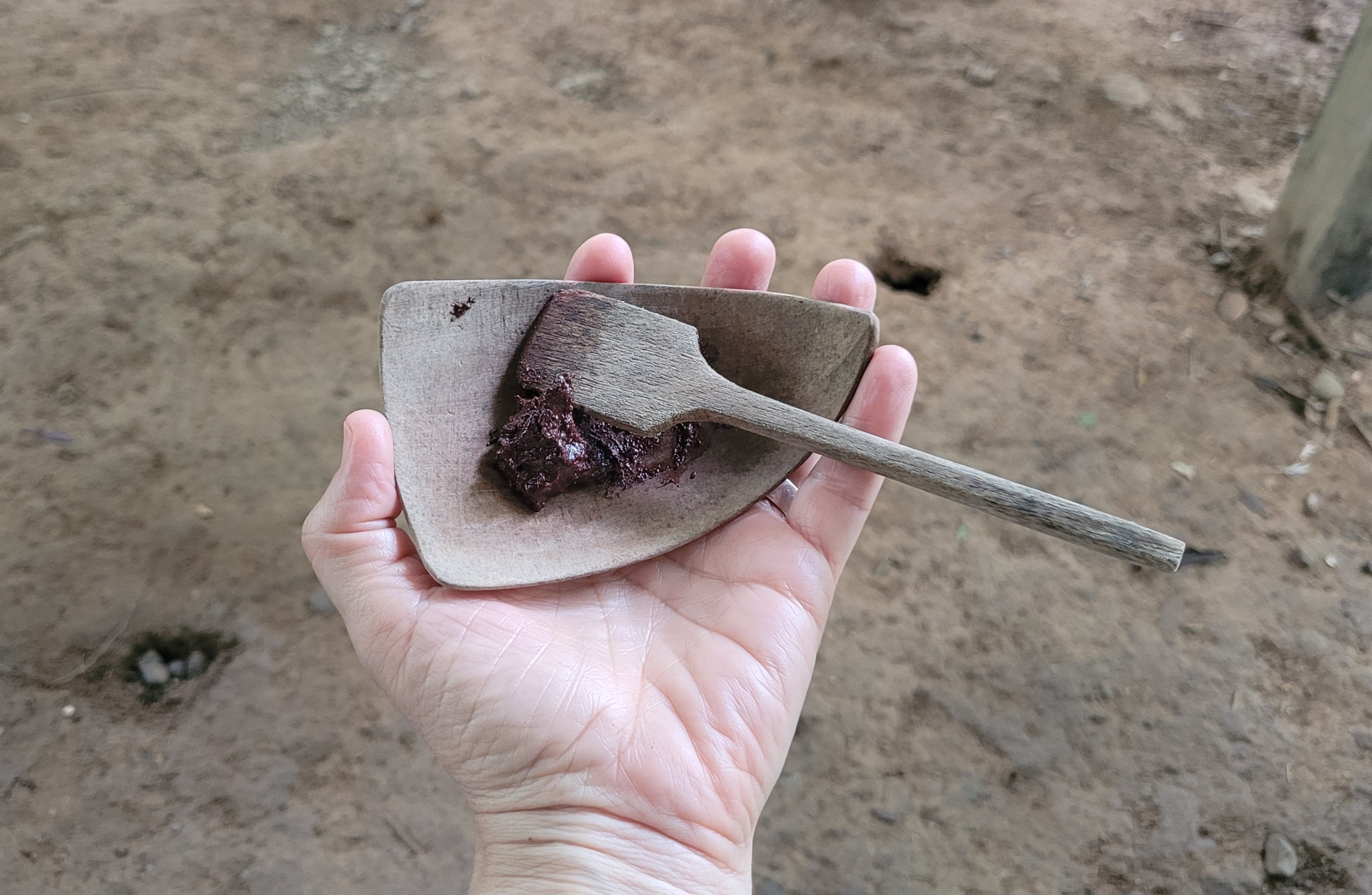
I bought this little container with finca made cacao butter to bring home. Leaves my skin very smooth.

The Hidden Wisdom: Cacao Leaves & Raw Beans
Cacao Leaves
Used in traditional practices for:
herbal tea for nausea, digestive upset, mild anxiety
poultices for minor wounds or inflammation
cleansing bundles to clear heavy energy
Leaves offer a grounding, soothing quality.
Raw Beans (Before Roasting)
Fresh cacao beans, surrounded by white pulp, are:
rich in enzymes and minerals
used for energy or fermented for gut health
offered in Indigenous ceremonies
chewed for oral health
symbolic seeds of intention
Spiritually, they represent potential, transformation, and inner growth, themes deeply aligned with midlife.

The Subtle Spiritual Medicine of Cacao
While cacao isn’t psychedelic or overpowering, it has a gentle spiritual presence recognized for thousands of years:
• It opens the heart.
Women often feel more connected, compassionate, and emotionally clear.
• It supports emotional release.
Grief, frustration, or old stories soften and move.
• It nurtures intuition.
Cacao grounds the body while opening inner awareness — ideal for meditation or journaling.
• It supports inner transitions.
Just like the fermentation process transforms raw beans into cacao, midlife transforms women into their deeper, wiser self.
Cacao mirrors this journey beautifully.

Do Your Very Own Mindful Cacao Ritual
You can of course sip cacao casually, while watching a movie or chatting with family and friends or choose a moment for a mindful ritual:
What You Need:
25–30g ceremonial cacao (double if sharing with a friend)
If you don’t have any, here is a suggestion: https://iherb.co/JZ3JbGF2 Or check this page with a variety to choose from: https://iherb.co/umSco5H7
Hot water or plant milk
A quiet space
Optional: a journal
This is not a traditional ceremony, it’s an invitation to slow down, soften, listen and take time for yourself.
Step 1: Prepare the Space
Turn off notifications
Light a candle if desired
Have your cacao powder ready
Think of this as creating a pause.
Step 2: Prepare the Cacao Mindfully
As you prepare the cacao, stay present with each step.
Heat water or plant milk (never boiling)
Stir in pure ceremonial cacao
Optional: pinch of cinnamon or vanilla
While stirring, bring your attention and gratitude to:
the earth it came from
the hands that grew and harvested it
the soil that was kept alive
Think of an intention:
“I choose calm.”
“I welcome clarity.”
…
Step 3: Sit With the Cup
Sit comfortably.
Hold the cup in both hands.
Feel the warmth.
Smell the cacao.
Let your breath slow down.
Optional: Breathing in to the count of 5, hold for 5, exhale for 5, hold for 5; repeat a few times if you wish to combine with breathwork.
Notice what arises:
sensations in the body
emotions
memories
nothing at all
All of it is welcome.
Step 4: Drink Slowly & Listen
Take small sips. After each sip, pause.
Let the cacao settle in your body.
Instead of asking big questions, try one gentle inquiry:
What wants my attention today?
Where do I need softness?
What is ready to be felt?
Then stop asking. Cacao “speaks” through:
body sensations
emotional shifts
subtle insights
a sense of calm or warmth
Not through words.
Step 5: Integration (5–10 min)
After finishing your cup:
Sit quietly
orWrite freely without editing
You’re not looking for answers - just listening.
If nothing comes, that’s also a message: Rest was needed.
Step 6: Closing
Place the empty cup down consciously. Give your gratitude and appreciation.
Then return to your day slowly - no rushing – incorporate your presence into your day.
Cacao is not a shortcut to enlightenment. It’s a plant ally that supports:
presence
nervous system regulation
emotional awareness
Some days it opens something. Some days it simply warms you.
Both are perfect.
As a contrast, let’s have a look at:
The Traditional Cacao Ceremony
Long before cacao became a “heart-opening drink” in wellness culture, it was a sacred plant in the ancient cultures of Mesoamerica, particularly among the Maya and Aztec civilizations.
For them, cacao was not casual nourishment. It was medicine, currency, and ritual substance. Cacao was part of a larger spiritual system, not a standalone experience.
Cacao was considered a gift from the gods.
The Maya associated cacao with life force, fertility, and the heart
The Aztecs linked it to Quetzalcoatl, the feathered serpent deity who brought wisdom to humanity
Cacao beans were used as currency, offerings, and ceremonial exchange
It was prepared as a bitter, frothy drink, often mixed with:
water
chili
spices
sometimes maize
Sweeteners were not part of the original use.
Purpose of a Traditional Cacao Ceremony
Traditional cacao ceremonies were not self-development rituals.
They were held to:
mark rites of passage
prepare for important communal decisions
support healing and transition
honor ancestors and deities
open communication with the spirit world
The ceremony served the community, not the individual ego.
Who Held the Ceremony
Cacao ceremonies were facilitated by shamans, elders, priests or priestesses.
These were people trained in:
plant knowledge
cosmology
ritual structure
energetic boundaries
Structure of a Traditional Ceremony
While practices varied by region and time, many ceremonies included:
ritual preparation of cacao
invocation of the four directions
offerings to the earth
drumming, chanting, or prayer
fasting or sexual abstinence beforehand
communal intention rather than personal manifestation
Cacao was often consumed in larger quantities than today, and its physical effects were well known and respected.
The Role of the Body
Traditional cacao ceremonies were embodied. They included:
movement or dance
rhythmic sound
breath
emotional release
This was not about quiet introspection.
It was about energetic activation and alignment with cosmic order.
What Traditional Ceremonies Were Not
They were not casual gatherings
They were not improvised
They were not guided visualizations
They were not focused on “opening the heart chakra”
They were not detached from lineage or land
They were precise, purposeful, and culturally embedded.
From Tradition to Modern Practice
Many modern cacao ceremonies are inspired by, but not identical to, traditional ones.
This isn’t wrong - but it is different.
Modern ceremonies tend to focus on:
personal healing
emotional processing
inner listening
nervous system regulation
Traditional ceremonies focused on:
communal balance
spiritual order
relationship with the unseen
honoring lineage

Cacao & Menopause
A wise plant ally for the midlife transition
Cacao has traditionally been associated with the heart, blood, and life force - all systems that undergo profound change during menopause.
When used gently and consciously, cacao can be a supportive companion through this transition.
Heart & Circulation
Cacao naturally supports:
blood flow
vascular elasticity
warmth in the body
For many women in midlife, this translates into:
improved circulation
a sense of inner warmth
softening around emotional tightness
This is especially relevant when estrogen declines and cardiovascular dynamics shift.
Nervous System Support
Menopause is not only hormonal - it is neurological.
Cacao contains compounds that may:
gently stimulate the nervous system
increase feelings of wellbeing
support focus and emotional clarity
For women experiencing:
anxiety
mood fluctuations
emotional sensitivity
a sense of “losing themselves”
cacao can act as a bridge back into the body, when used in small, mindful amounts.
Emotional Processing & the Heart
Midlife often brings:
grief for past versions of self
unprocessed emotions
a reassessment of identity and purpose
Cacao doesn’t force emotional opening.
It simply creates a softer internal climate where feelings can surface safely.
This makes it a powerful ally for:
journaling
reflection
gentle inner inquiry
ritual pauses during hormonal shifts
A Note of Caution
Cacao is not suitable for everyone.
Women who:
are highly sensitive to stimulants
experience strong palpitations
have severe anxiety
are in late-stage adrenal exhaustion
may need:
very small doses
infrequent use
or no cacao at all
Menopause is a time to listen deeply to the body, not override it - even with plant allies.
Cacao as a Companion, Not a Cure
Cacao does not “fix” menopause.
But it can:
support presence
invite self-connection
mark moments of transition
offer warmth and grounding
In this way, cacao becomes less about ceremony - and more about relationship. A relationship with yourself, your body, and this phase of life.

Would you like support navigating the many symptoms that can occure from perimenopause to postmenopause? Please check my programs I created for midlife women at www.soulcompact.com . I would love to guide you to the root cause and into relief and empowerment.
And if you would like to order cacao for yourself or as a gift, here the links again:
https://iherb.co/JZ3JbGF2 Or check this page to choose from a variety: https://iherb.co/umSco5H7
You rock!💛
Blessings
Tamoah

Monthly Soul Spark
Cacao for midlife women
Mindful Cacao Ritual: A Heart-Centered Ally for Midlife Women
Inspired by my recent journey to an organic cacao finca in Panama
My Journey to an Organic Cacao Finca
I traveled from the mountains and cloudforest to the Caribbean side of Panama, exploring tropical beaches, vibrant culture, and lush landscapes. Along the way, we visited an organic cacao finca, a small family-run plantation nestled between the jungle and the warm, moist sea breeze.
Walking among the cacao trees, the owner showed us a pod covered in pale, ghostly patches.
“This fungus kills up to 80% of our crop every year,” he explained.
I saw pods shriveled prematurely, while some looked fine on the outside but were powder inside. Then came the part that stayed with me:
“We’re organic. We don’t use chemicals to fight it. Chemicals kill the soil. And without healthy soil, nothing has life. We tried everything natural, but nothing works. So we had to learn to live with it.”
It reminded me how midlife asks women to make similar choices: letting go of what doesn’t serve to protect what truly matters.
When he opened a fresh cacao pod and placed the white, sticky fruit in my hand, I felt the raw aliveness of cacao - sweet, tangy, and soft - a plant that has nourished humanity for thousands of years. That day transformed cacao, for me, from “healthy chocolate” into a true ally for women in midlife.
The Healing Power of Real Cacao for Midlife Women
Cacao is not cocoa. Real, minimally processed cacao is nutrient-rich and carries compounds that our bodies recognize and benefit from. Here’s why it’s especially supportive for midlife women:
1. Calms the Nervous System
Cacao is rich in magnesium, tryptophan, theobromine, and anandamide, helping ease:
anxiety
tension
irritability
mood swings
restless sleep
It provides warmth without overstimulation - perfect for women who become caffeine-sensitive during perimenopause.
2. Supports Hormonal Balance
Cacao’s minerals and antioxidants help the body manage:
fatigue
inflammation
blood flow changes
brain fog
emotional fluctuations
Many women report feeling grounded yet open after drinking cacao.
3. Awakens Energy and Vitality
Theobromine gives a gentle, uplifting boost without the crash of coffee.
Cacao becomes a daily companion for women navigating midlife energy dips.
4. Reconnects Women with Pleasure
Cacao increases “feel-good” neurotransmitters like dopamine and PEA (the love molecule), helping women rediscover:
sensuality
joy
creativity
inspiration
Midlife is a gateway, not a loss - cacao supports the rising of that inner fire.
Beyond the Beans: Cacao Butter for Mature Skin
Cacao butter is a secret gift for mature skin, offering:
deeply moisturizing fatty acids
antioxidants
anti-inflammatory compounds
natural protection from dryness
nutrients supporting elasticity
For menopausal skin, cacao butter can:
soften fine lines
soothe irritation
strengthen the skin barrier
improve firmness
restore radiance
Traditionally, women in Panama apply cacao butter to:
face, belly, breasts
dry patches, scars, stretch marks
It’s a simple self-care ritual, reminding us that nature provides remedies for every life phase.
I bought this little container with finca made cacao butter to bring home. Leaves my skin very smooth.
The Hidden Wisdom: Cacao Leaves & Raw Beans
Cacao Leaves
Used in traditional practices for:
herbal tea for nausea, digestive upset, mild anxiety
poultices for minor wounds or inflammation
cleansing bundles to clear heavy energy
Leaves offer a grounding, soothing quality.
Raw Beans (Before Roasting)
Fresh cacao beans, surrounded by white pulp, are:
rich in enzymes and minerals
used for energy or fermented for gut health
offered in Indigenous ceremonies
chewed for oral health
symbolic seeds of intention
Spiritually, they represent potential, transformation, and inner growth, themes deeply aligned with midlife.
The Subtle Spiritual Medicine of Cacao
While cacao isn’t psychedelic or overpowering, it has a gentle spiritual presence recognized for thousands of years:
• It opens the heart.
Women often feel more connected, compassionate, and emotionally clear.
• It supports emotional release.
Grief, frustration, or old stories soften and move.
• It nurtures intuition.
Cacao grounds the body while opening inner awareness — ideal for meditation or journaling.
• It supports inner transitions.
Just like the fermentation process transforms raw beans into cacao, midlife transforms women into their deeper, wiser self.
Cacao mirrors this journey beautifully.
Do Your Very Own Mindful Cacao Ritual
You can of course sip cacao casually, while watching a movie or chatting with family and friends or choose a moment for a mindful ritual:
What You Need:
25–30g ceremonial cacao (double if sharing with a friend)
If you don’t have any, here is a suggestion: https://iherb.co/JZ3JbGF2 Or check this page with a variety to choose from: https://iherb.co/umSco5H7
Hot water or plant milk
A quiet space
Optional: a journal
This is not a traditional ceremony, it’s an invitation to slow down, soften, listen and take time for yourself.
Step 1: Prepare the Space
Turn off notifications
Light a candle if desired
Have your cacao powder ready
Think of this as creating a pause.
Step 2: Prepare the Cacao Mindfully
As you prepare the cacao, stay present with each step.
Heat water or plant milk (never boiling)
Stir in pure ceremonial cacao
Optional: pinch of cinnamon or vanilla
While stirring, bring your attention and gratitude to:
the earth it came from
the hands that grew and harvested it
the soil that was kept alive
Think of an intention:
“I choose calm.”
“I welcome clarity.”
…
Step 3: Sit With the Cup
Sit comfortably.
Hold the cup in both hands.
Feel the warmth.
Smell the cacao.
Let your breath slow down.
Optional: Breathing in to the count of 5, hold for 5, exhale for 5, hold for 5; repeat a few times if you wish to combine with breathwork.
Notice what arises:
sensations in the body
emotions
memories
nothing at all
All of it is welcome.
Step 4: Drink Slowly & Listen
Take small sips. After each sip, pause.
Let the cacao settle in your body.
Instead of asking big questions, try one gentle inquiry:
What wants my attention today?
Where do I need softness?
What is ready to be felt?
Then stop asking. Cacao “speaks” through:
body sensations
emotional shifts
subtle insights
a sense of calm or warmth
Not through words.
Step 5: Integration (5–10 min)
After finishing your cup:
Sit quietly
orWrite freely without editing
You’re not looking for answers - just listening.
If nothing comes, that’s also a message: Rest was needed.
Step 6: Closing
Place the empty cup down consciously. Give your gratitude and appreciation.
Then return to your day slowly - no rushing – incorporate your presence into your day.
Cacao is not a shortcut to enlightenment. It’s a plant ally that supports:
presence
nervous system regulation
emotional awareness
Some days it opens something. Some days it simply warms you.
Both are perfect.
As a contrast, let’s have a look at:
The Traditional Cacao Ceremony
Long before cacao became a “heart-opening drink” in wellness culture, it was a sacred plant in the ancient cultures of Mesoamerica, particularly among the Maya and Aztec civilizations.
For them, cacao was not casual nourishment. It was medicine, currency, and ritual substance. Cacao was part of a larger spiritual system, not a standalone experience.
Cacao was considered a gift from the gods.
The Maya associated cacao with life force, fertility, and the heart
The Aztecs linked it to Quetzalcoatl, the feathered serpent deity who brought wisdom to humanity
Cacao beans were used as currency, offerings, and ceremonial exchange
It was prepared as a bitter, frothy drink, often mixed with:
water
chili
spices
sometimes maize
Sweeteners were not part of the original use.
Purpose of a Traditional Cacao Ceremony
Traditional cacao ceremonies were not self-development rituals.
They were held to:
mark rites of passage
prepare for important communal decisions
support healing and transition
honor ancestors and deities
open communication with the spirit world
The ceremony served the community, not the individual ego.
Who Held the Ceremony
Cacao ceremonies were facilitated by shamans, elders, priests or priestesses.
These were people trained in:
plant knowledge
cosmology
ritual structure
energetic boundaries
Structure of a Traditional Ceremony
While practices varied by region and time, many ceremonies included:
ritual preparation of cacao
invocation of the four directions
offerings to the earth
drumming, chanting, or prayer
fasting or sexual abstinence beforehand
communal intention rather than personal manifestation
Cacao was often consumed in larger quantities than today, and its physical effects were well known and respected.
The Role of the Body
Traditional cacao ceremonies were embodied. They included:
movement or dance
rhythmic sound
breath
emotional release
This was not about quiet introspection.
It was about energetic activation and alignment with cosmic order.
What Traditional Ceremonies Were Not
They were not casual gatherings
They were not improvised
They were not guided visualizations
They were not focused on “opening the heart chakra”
They were not detached from lineage or land
They were precise, purposeful, and culturally embedded.
From Tradition to Modern Practice
Many modern cacao ceremonies are inspired by, but not identical to, traditional ones.
This isn’t wrong - but it is different.
Modern ceremonies tend to focus on:
personal healing
emotional processing
inner listening
nervous system regulation
Traditional ceremonies focused on:
communal balance
spiritual order
relationship with the unseen
honoring lineage
Cacao & Menopause
A wise plant ally for the midlife transition
Cacao has traditionally been associated with the heart, blood, and life force - all systems that undergo profound change during menopause.
When used gently and consciously, cacao can be a supportive companion through this transition.
Heart & Circulation
Cacao naturally supports:
blood flow
vascular elasticity
warmth in the body
For many women in midlife, this translates into:
improved circulation
a sense of inner warmth
softening around emotional tightness
This is especially relevant when estrogen declines and cardiovascular dynamics shift.
Nervous System Support
Menopause is not only hormonal - it is neurological.
Cacao contains compounds that may:
gently stimulate the nervous system
increase feelings of wellbeing
support focus and emotional clarity
For women experiencing:
anxiety
mood fluctuations
emotional sensitivity
a sense of “losing themselves”
cacao can act as a bridge back into the body, when used in small, mindful amounts.
Emotional Processing & the Heart
Midlife often brings:
grief for past versions of self
unprocessed emotions
a reassessment of identity and purpose
Cacao doesn’t force emotional opening.
It simply creates a softer internal climate where feelings can surface safely.
This makes it a powerful ally for:
journaling
reflection
gentle inner inquiry
ritual pauses during hormonal shifts
A Note of Caution
Cacao is not suitable for everyone.
Women who:
are highly sensitive to stimulants
experience strong palpitations
have severe anxiety
are in late-stage adrenal exhaustion
may need:
very small doses
infrequent use
or no cacao at all
Menopause is a time to listen deeply to the body, not override it - even with plant allies.
Cacao as a Companion, Not a Cure
Cacao does not “fix” menopause.
But it can:
support presence
invite self-connection
mark moments of transition
offer warmth and grounding
In this way, cacao becomes less about ceremony - and more about relationship. A relationship with yourself, your body, and this phase of life.
Would you like support navigating the many symptoms that can occure from perimenopause to postmenopause? Please check my programs I created for midlife women at www.soulcompact.com . I would love to guide you to the root cause and into relief and empowerment.
And if you would like to order cacao for yourself or as a gift, here the links again:
https://iherb.co/JZ3JbGF2 Or check this page to choose from a variety: https://iherb.co/umSco5H7
You rock!💛
Blessings
Tamoah
© All Copyrights Reserved
© All Copyrights Reserved